Mango Languages Learning
- 4.8
- Rating
- 1.00M
- Installs
- Free
- Price

 Analysis by App-foxy
Learning a language can feel difficult before you even say the first sentence. I like Mango Languages Learning because it makes the starting point less intimidating: instead of throwing a large grammar course at me, it places practical conversation at the center. The app is designed for people who want to understand and use useful expressions in real situations, not simply collect vocabulary cards.
My first impression is that it works best as a guided companion for regular practice. It is an Education app from Mango Languages, available free to download for everyone, with optional in-app purchases ranging from $0.99 to $199.99 per item. That combination makes it easy to try without committing immediately, although the possible purchase range means I would check the plan details carefully before paying.
The app has been available since April 18, 2012, and its current version is 8.77.0 for devices running Android 8.0 or later. Its audience is broad: a complete beginner can start with basic phrases, while someone who already knows a little can use the conversational material to rebuild confidence. I would not describe it as a replacement for a teacher, a course with live feedback, or serious academic study. I see it as a practical way to turn spare moments into useful language exposure.
You May Also Like

 Blood Strike: 2.5 Anniversary
Blood Strike’s Loadouts Turn Every Drop Into a Tactical Gamble
A close look at Blood Strike’s custom loadouts: how fast access to signature weapons reshapes its battle royale rhythm, rewards preparation, and narrows the gap between fights.

 Pandora - Music & Podcasts
Pandora’s Music Is Easy to Start, but Harder to Recover
Pandora’s strength is its low-effort path from a seed to a station. Its weak spot is how much confidence it asks you to place in connection, setup, and quiet recovery.

 8 Ball Pool
 Is Built on Rivalries, Rematches, and Routine
A close look at the rivalries, rematches, shared routines, and unanswered safety questions that turn a quick pool match into a persistent mobile community.

 Samsung Music
’s Quiet Strength Is Playing What You Already Own
Its reach comes less from spectacle than from dependable access to a personal library. That simplicity is both the app’s strongest retention engine and its ceiling.

 AccuWeather: Weather Radar
AccuWeather Review: A Quick, Clear Forecast for Everyday Decisions
For everyday plans, the best forecast is the one you can understand quickly. AccuWeather makes rain timing, radar, and local conditions easy to act on, with a few trade-offs.

 Hill Climb Racing
Why Hill Climb Racing Still Turns Crashes Into One More Run
A tiny car, a bumpy hill and one more upgrade: Hill Climb Racing keeps resurfacing because its simple chaos makes every near-miss feel personal.
More From Our News Desk



What the first session feels like
After installing Mango Languages Learning, I would begin by choosing one language and resisting the temptation to browse everything at once. The most helpful first decision is not “How much can I learn today?” but “Where will this language fit into my life?” If the answer is a commute, a lunch break, or a few quiet minutes before bed, the app becomes easier to use consistently.
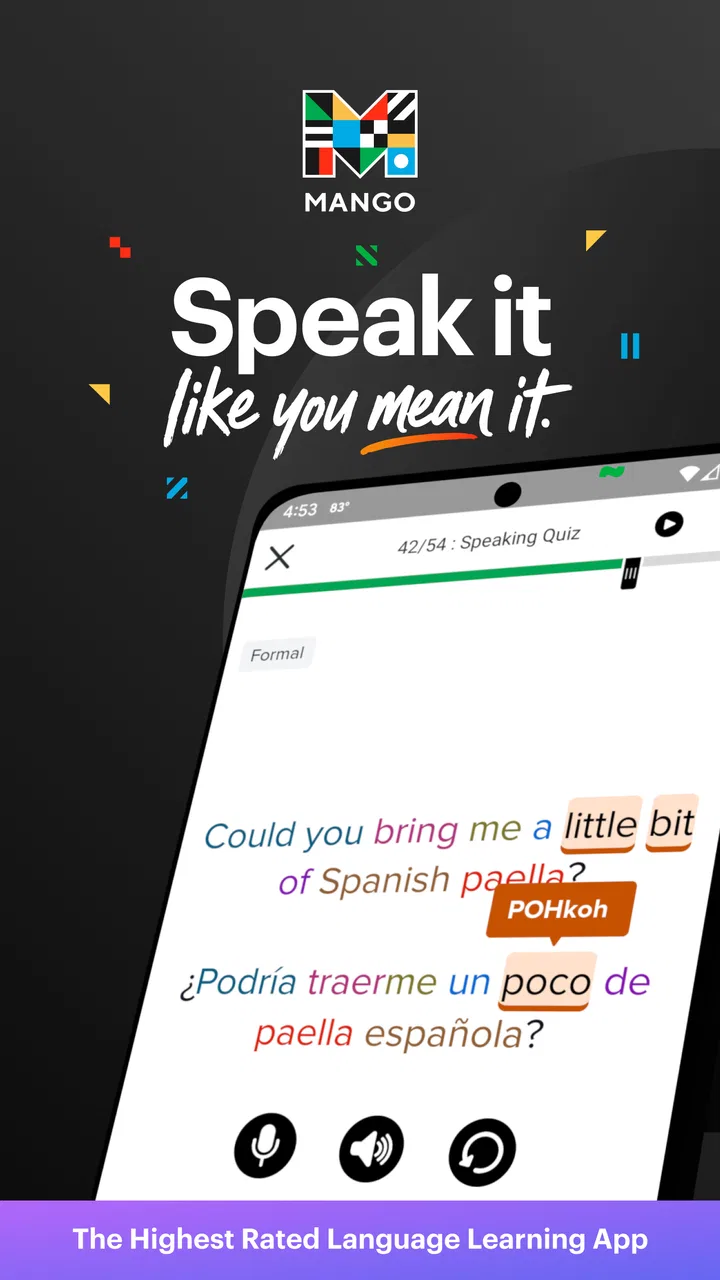
The central idea is conversation. Lessons are built around expressions that I can imagine hearing or saying, which gives the material a clear purpose. Rather than memorizing isolated words with no context, I pay attention to how a phrase sounds as a complete unit and what situation it belongs to. That approach is especially useful for travel, meeting relatives, welcoming customers, or preparing for a move.
I also appreciate that the app is not limited to one narrow type of learner. A traveler can focus on immediate survival language. A curious beginner can explore a new language without buying a full course first. Someone returning to a language after years away can use the conversational structure to reactivate familiar sounds. The trade-off is that users looking mainly for detailed written grammar may find the experience less satisfying than a textbook or a dedicated grammar reference.
The public response suggests that many people find the approach approachable: it holds an average rating of 4.8 from around 24 thousand ratings, with more than 1 million installs. Those figures do not tell me whether it matches my learning style, but they do make the app feel established rather than experimental. I would still judge it by the first few lessons, because language apps can be popular and yet unsuitable for a particular goal.
Choosing a realistic goal before tapping through lessons
My practical advice is to choose a small outcome for the first week. “Learn Spanish” is too vague to guide a session. “Introduce myself and ask a simple question” is much better. With Mango’s conversation-first design, a goal like that gives me something to listen for, repeat, and eventually say without looking at the screen.
This is also where the app differs from a typical flashcard tool. Flashcards are excellent for testing recall, but they can make me feel successful while I still hesitate in a real exchange. Mango’s useful strength is the connection between a phrase and its spoken rhythm. I would use flashcards as a supplement if I needed them, not as the only method.
Making the setup work for a busy day
I would not begin by trying to create a perfect study schedule. Instead, I would attach the first lesson to an existing habit. For example, I might listen during the first part of a morning coffee break, then repeat a few expressions later without opening the app. This two-part routine is more realistic than promising myself a long session every day.
A good first session should end while the material still feels manageable. Stopping after a few phrases gives me a chance to remember them later, whereas rushing through many screens can create the illusion of progress without useful recall. The app is most valuable when I treat each lesson as material to use, not content to finish.
From installation to a first meaningful success
Once I have selected a language, I would listen to the first conversational material before worrying about perfect pronunciation. My first task would be simple: identify one phrase I could genuinely use and repeat it several times aloud. Speaking to a phone can feel awkward, but silent recognition is not the same as being ready to speak. Even a rough first attempt gives the lesson a practical purpose.
The next step is to break the phrase into parts without losing the natural flow. I might listen once for the overall meaning, again for the sound, and then repeat it at a comfortable pace. This is one of the more useful workflows for a beginner because it avoids two common mistakes: copying sounds without understanding them, or analyzing every word so intensely that the sentence never becomes usable.
My first meaningful success would be recognizing the phrase later without seeing the translation. I would test this away from the lesson by recalling the situation in which I might use it. If I can remember the intended meaning and produce most of the sentence, the session has done its job. That is a better milestone than simply reaching the end of a lesson.
For a realistic everyday scenario, imagine preparing for a short trip. On the first day, I learn a greeting and a basic request. On the next day, I revisit those expressions before adding another exchange. At a café or hotel, I may not speak perfectly, but I have a prepared starting point. The app cannot guarantee that every real conversation will follow the lesson, yet it can reduce the blank feeling that often stops beginners from trying.
A listening-and-speaking loop that gives better results
I would use a three-pass loop. First, I listen for meaning and situation. Second, I repeat while paying attention to the sound and pacing. Third, I close the lesson or look away and try to reconstruct the phrase from memory. The third pass is the important one: it shows whether I can retrieve the language rather than merely recognize it on the screen.
Another useful habit is to keep a short personal list of phrases that matter to my life. I might choose language for introducing my job, asking someone to repeat themselves, or explaining that I am still learning. These expressions are more likely to stick than vocabulary chosen only because it appears next in a sequence. Mango’s practical orientation makes this kind of personal selection feel natural.
I would also avoid judging pronunciation after a single attempt. A new sound can feel strange because my mouth is using unfamiliar movements, not because I am incapable of learning it. Replaying a phrase and comparing my rhythm with the model is more productive than trying to force a perfect accent immediately. The app can provide exposure and repetition, but patient practice is still my responsibility.
Where the app fits beside familiar alternatives
Compared with a conventional classroom, Mango is more flexible and less personal. I can practice when I have time, but there is no teacher in the room adapting the explanation to my exact mistake. Compared with a textbook, it gives spoken language a more prominent role and lowers the barrier to beginning. Compared with a game-like vocabulary app, it feels more focused on usable exchanges than on maintaining a playful streak.
That comparison matters when choosing a tool. If I need conversation confidence for everyday situations, Mango is a sensible starting point. If I need formal writing, advanced reading, exam preparation, or detailed correction of my own speech, I would combine it with another resource or choose a more specialized course. No single app handles every part of language learning equally well.
Small points that can confuse a new learner
The first possible confusion is mistaking familiarity for mastery. After hearing the same expression several times, I may feel that I know it, but recognition while the app is prompting me is easier than recalling it independently. I would deliberately pause before replaying and try to say the phrase first. That small delay turns passive exposure into a more useful test.
A second issue is the temptation to chase breadth. Seeing many language choices can encourage me to sample several at once. I would avoid that during the beginning. Switching constantly makes it harder to notice whether the method is working, while staying with one language gives the sounds and sentence patterns time to become familiar.
A third point concerns expectations about conversation. Practical phrases are valuable, but real people do not always speak like lesson examples. They may use slang, shorten words, speak quickly, or change the subject. I would treat Mango as preparation for entering a conversation, not as a script that guarantees I will understand everything afterward. That mindset keeps the app useful without expecting it to simulate every social situation.
There is also a financial decision to make. The app is free to download, but optional purchases are available, and individual items can range from $0.99 to $199.99. I would first explore the free experience and decide what I actually need before purchasing. A learner who only wants a few travel expressions may not need the same commitment as someone planning a long-term study routine.
The age rating is Everyone, which makes the app suitable for a wide audience. Even so, suitability is not the same as learning fit. A child who needs playful supervision, a university student preparing for a language examination, and an adult preparing for a trip may all need different support around the same app. I would choose the learning goal first and the tool second.
When I would choose something else
I would skip Mango as my main resource if my immediate priority were writing essays, mastering complex grammar terminology, or receiving detailed corrections from a human instructor. Its practical conversation focus is an advantage for some learners, but it also means I would need another source for areas that depend on extended writing and individualized feedback.
I would also look elsewhere if I knew I only stay motivated through competitive game mechanics. Mango may be more useful than entertaining for that kind of learner. Someone who needs points, challenges, or a strong social layer might prefer a different style and use Mango only as a listening and phrase-practice supplement.
On the other hand, I would recommend giving it a fair trial to anyone who feels embarrassed about starting from zero. The conversational framing makes the first step concrete. You do not need to understand an entire language before using one greeting, one request, or one question. That sense of immediate usefulness is where the app makes its strongest case.
Building a next step that lasts
After the first successful phrase, I would create a simple rotation rather than endlessly moving forward. One session can introduce new material, the next can revisit older expressions, and a later session can combine them in a small imagined exchange. This prevents the common problem of completing lessons while forgetting the language that made them worthwhile.
I would connect each expression to a personal scene. Picture the doorway where I might greet someone, the shop where I might ask for help, or the message I might send to a friend. The more specific the scene, the easier it becomes to retrieve the phrase. This technique is especially compatible with Mango because its material is already organized around practical communication.
Another advanced but simple habit is to practice the same phrase in three modes: listen to it, say it while looking at the text, and say it from memory without visual support. Each mode exposes a different weakness. If listening is easy but speaking is difficult, I need more aloud practice. If speaking is possible but meaning disappears without the translation, I need stronger recall. This helps me decide what to repeat instead of repeating everything equally.
I would keep the routine modest enough to survive a busy week. A short, focused session that I actually repeat is more valuable than an ambitious plan abandoned after a few days. Mango’s free starting point makes experimentation easy, while the optional purchases mean I can postpone a larger commitment until I know whether the conversational approach fits me.
The developer, Mango Languages, has kept this app in the language-learning space for many years, and the current release supports Android 8.0 and later. Those details matter mainly because a first-time user can check device compatibility before installing and can approach the app as an established learning product rather than a temporary novelty.
My final view is positive, with clear boundaries. Mango Languages Learning is strongest when I use it to turn listening into a first spoken exchange. It gives beginners a reassuring path from choosing a language to using a phrase, and it suits travelers, casual learners, and people rebuilding confidence. I would pair it with grammar, reading, writing, or human conversation practice when those become important. If your goal is to start speaking practical language without making the first session feel overwhelming, I think it is worth trying.
FAQs for Mango Languages Learning
01What is Mango Languages Learning, and how does it work?
Mango Languages Learning is a language acquisition app that offers a comprehensive and interactive approach to learning new languages. It provides lessons in over 70 languages, using a methodology that focuses on conversation skills. The app includes audio from native speakers, cultural insights, and a variety of exercises to enhance vocabulary and grammar understanding.
02Is Mango Languages Learning suitable for beginners?
Yes, Mango Languages Learning is designed to accommodate learners at all levels, including beginners. The app starts with basic vocabulary and phrases, gradually building up to more complex conversations. It also offers grammar and cultural notes to help beginners understand the language contextually, making it a well-rounded starting point.
03Does Mango Languages Learning require an internet connection to use?
Mango Languages Learning primarily requires an internet connection to download lessons. However, once lessons are downloaded, they can be accessed offline. This feature is particularly useful for users who want to continue learning on the go without relying on a constant internet connection.
04How does Mango Languages Learning compare to other language learning apps?
Mango Languages Learning distinguishes itself with its focus on real-world conversations and cultural insights. Unlike some apps that prioritize rote memorization, Mango emphasizes practical language use and cultural context. It also offers a wide variety of languages, including less commonly taught ones, making it a versatile choice for diverse learners.
05What devices are compatible with Mango Languages Learning?
Mango Languages Learning is compatible with both Android and iOS devices. It can be downloaded from the Google Play Store or Apple App Store. The app is designed to run smoothly on smartphones and tablets, ensuring a flexible and accessible learning experience across different devices.
Pros
- Wide range of languages offered.
- User-friendly interface.
- Interactive lessons enhance learning.
- Offline access for convenience.
- Cultural insights included.
Cons
- Limited free content available.
- No live tutor sessions.
- Pronunciation feedback can be inconsistent.
- Requires a stable internet connection for updates.
- Some languages lack advanced levels.

Mango Languages Learning
Gallery